
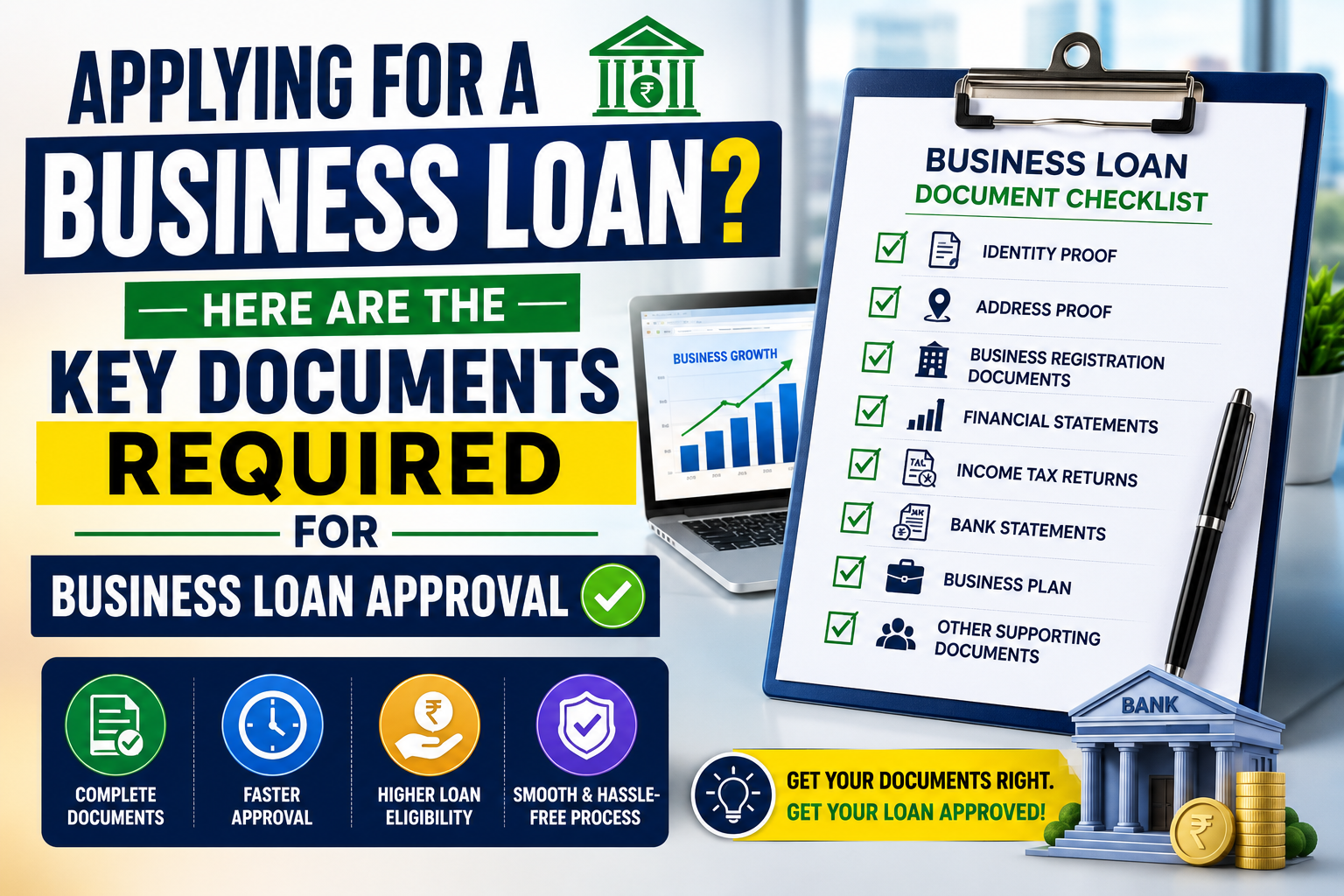
Applying for a Business Loan? Here Are the Key Documents Required for Business Loan Approval
Applying for a business loan involves a structured evaluation process where lenders review financial stability, identity, and operational credibility. Proper documentation plays a central role in this assessment, as it helps establish the applicant’s ability to repay and maintain business continuity.
Key Identity and Address Proof Documents
Lenders begin the verification process by confirming the applicant’s identity and residence details. These documents ensure regulatory compliance and reduce the chances of fraud or misrepresentation.
The following documents are generally reviewed under this category:
- Identity proof: Government-issued documents such as Aadhaar card, PAN card, passport, or voter ID are used to confirm the applicant’s identity and verify authenticity during the onboarding process.
- Address proof: Utility bills, passport, Aadhaar card, or rental agreements help establish the residential or business location, ensuring that communication and verification processes can be completed efficiently.
These documents form the basic foundation for any loan application and are mandatory across most lenders.
Business Registration and Legal Documents
To verify your company's structure and legal standing, lenders will review your official registration documents. Having this paperwork organized and up to date is essential to fast-track your business loan approval process.
Here are the key legal documents you need to have ready:
- Business Registration Certificate: Documents like your GST registration, MSME certificate, or Shop & Establishment license prove that your business is legally recognized and compliant with local regulations
- Incorporation Documents: A partnership deed, Memorandum of Association (MOA), or Articles of Association (AOA) provide clear insight into your ownership structure, internal roles, and business governance.
- Trade Licenses: Sector-specific licenses prove that you are fully authorized to operate within your industry, which significantly reduces regulatory risks for lenders.
The Bottom Line: Presenting clean, official records helps lenders verify your operational legitimacy, giving them the confidence they need to approve your business loan quickly and without hassle.
Financial Statements and Income Records
Financial documentation is used to evaluate repayment capacity and cash flow stability. These records provide measurable data about the financial health of the entity.
The following financial documents are typically required:
- Bank statements: Recent bank account statements, usually for the last 6–12 months, are reviewed to analyse transaction patterns, cash inflow consistency, and existing commitments.
- Profit and loss statements: These statements indicate revenue generation, expenses, and overall profitability, helping lenders understand operational performance over a defined period.
- Balance sheets: Balance sheets present assets, liabilities, and equity positions, offering a snapshot of financial stability and long-term sustainability.
Accurate financial records can directly impact approval outcomes and loan terms.
Income Tax and Compliance Documents
Tax-related documents help verify declared income and ensure regulatory compliance. Lenders rely on these records to cross-check financial claims made during application.
The key documents in this category include:
- Income tax returns (ITR): Filed ITRs for the past two to three years provide verified income data and demonstrate financial discipline in meeting statutory obligations.
- Tax audit reports: Where applicable, audit reports confirm that financial statements have been reviewed as per regulatory norms, adding an additional level of credibility.
- GST returns: GST filings reflect sales activity and operational scale, offering insights into business turnover and compliance history.
Collateal and Asset-Related Documents
In certain cases, lenders may require collateral to secure the loan. Asset-related documents are used to establish ownership and valuation details for such security.
The following documents are typically reviewed:
- Property documents: Title deeds, property tax receipts, and ownership records are submitted to verify the legal ownership and valuation of immovable assets used as collateral.
- Asset valuation reports: These reports provide an estimated market value of pledged assets, allowing lenders to determine risk exposure and lending limits.
- Insurance documents: Insurance papers ensure that the pledged asset is protected against risks, which supports risk mitigation for both parties.
Collateral documentation may vary depending on whether the loan is secured or unsecured.
Importance of Document Accuracy During Application
The accuracy and consistency of submitted documents play a crucial role in the evaluation process. Even minor discrepancies can lead to delays or additional verification requirements.
Key aspects that influence documentation quality include:
- Consistency in details: Information such as name, address, and business details must match across all submitted documents to avoid verification issues.
- Completeness of submission: Missing documents can result in incomplete applications, leading to delays or rejection during initial screening.
- Updated records: Financial and compliance documents should be recent and up to date, ensuring that lenders evaluate current business performance.
Maintaining accurate records supports a smoother review process and reduces back-and-forth verification.
Conclusion
A clear understanding of the documents required for business loan approval allows applicants to organise records in advance, helping streamline the overall application process and ensuring timely evaluation by lenders.


0 Comments